Tahoe Backcountry Snow

  • Winter 25-26 Forecasting JournalSeasonal forecasting narrative and journal.
  • Current Wx. at 6350′Current weather station info at 6350′ in Carnelian Bay.
  • About
  • Glossary of Terms
  • Archive
  • Persistent Juneuary

    January 15th, 2026

    Backcountry obs.:

    Tours around the Tahoe backcountry this week, both on the West Shore (1/13) and in the Mt. Rose area (1/15) revealed surprisingly resilient snow conditions, despite the recent dry, warm weather. Low January sun angles and very dry air are helping to preserve surface snow on shady, sheltered N and NE aspects. Above treeline, recent NE winds have hammered any unconsolidated snow into firm, frozen wind board, both supportable, and at times breakable.

    Lower elevations and any aspect that receives sun has now crusted over into breakable solar crusts. Treed solar aspects also have breakable firm surfaces from refrozen tree drippings, while true, open, southerly aspects now hold supportable melt-freeze conditions.

    Combine this grab bag of surface snow conditions with a week’s worth of skier traffic since the last snowfall (1/8), and you have truly sporty ski conditions varying from a downright hootenanny good time, to death crust, to slide for life, to “was that a corn turn?!” all within a single lap. It’s ideal for building character and encouraging exploration out into the deeper reaches away from the masses.

    Weather and forecast thoughts:

    Going into the MLK weekend, “persistence” jumps out as the weather theme of the holiday weekend. Clear skies, light winds, and warm days will prevail through the coming weekend and into the coming week, potentially lasting through the end of January. Peering way out towards the close of the month, there are some hints of change in the pattern, but specifics are impossible to foresee.

    Today (1/15) through MLK Day (1/19) expect mostly clear skies, light winds and daily high temps into the 40s across the backcountry, with lows near to well-below freezing in drainages and depressions. Along ridge tops and in mid-slope areas, warmer overnight lows will struggle to drop beyond the upper 30s to low 40s and nightly light to moderate easterly winds could continue to expand wind board across open slopes and bowls. For example, this morning at 0607 at 9200′ in the Mt. Rose area it was 45.2°F with an 11.6°F dew point and 24% RH under clear skies and light easterly winds! Meanwhile it was 30°F at lake level. These classic, high pressure inversions will continue through the weekend and likely well into next week.

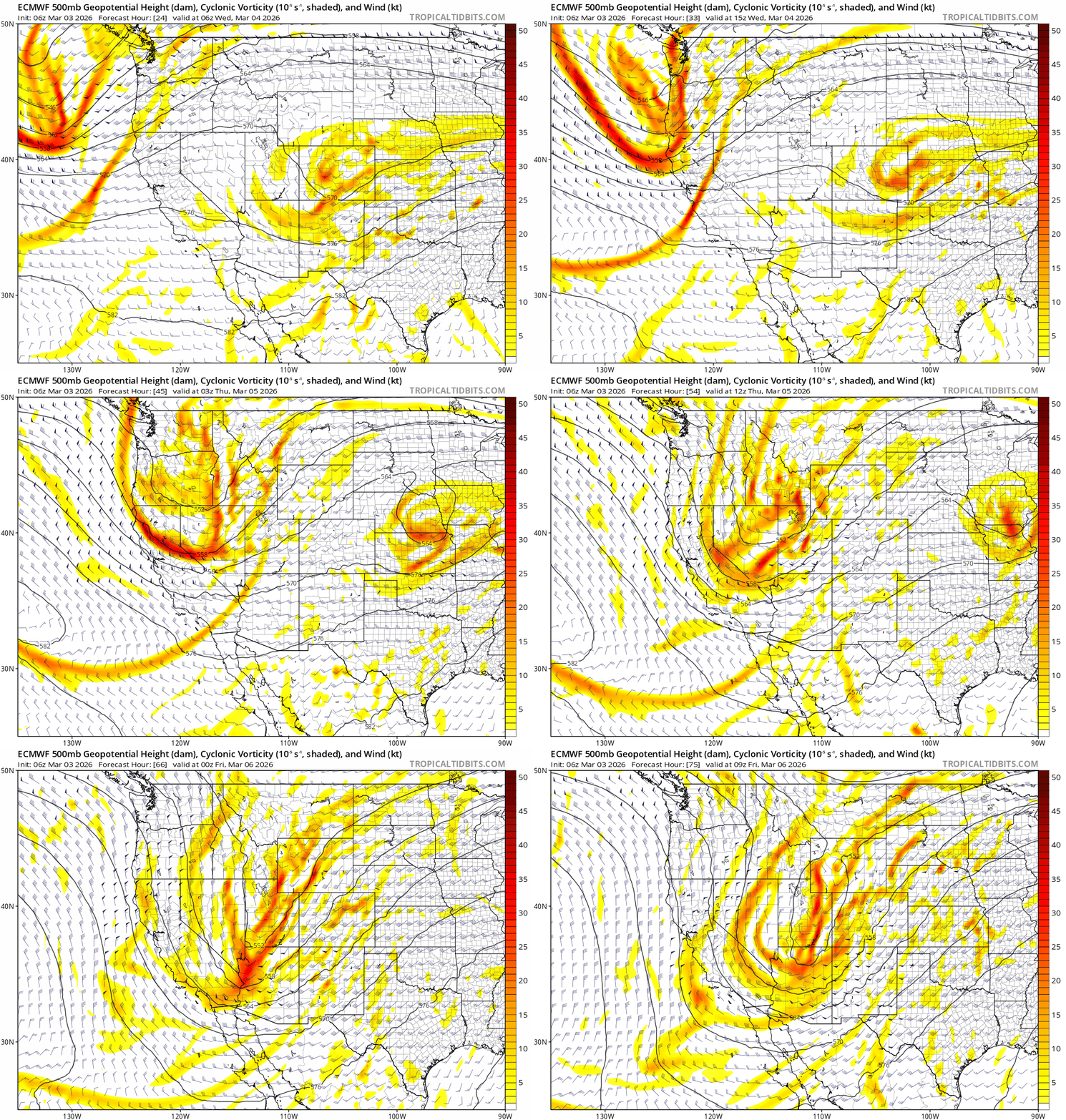
    The culprit is a blocking ridge of high pressure that continues its big sit over the west.

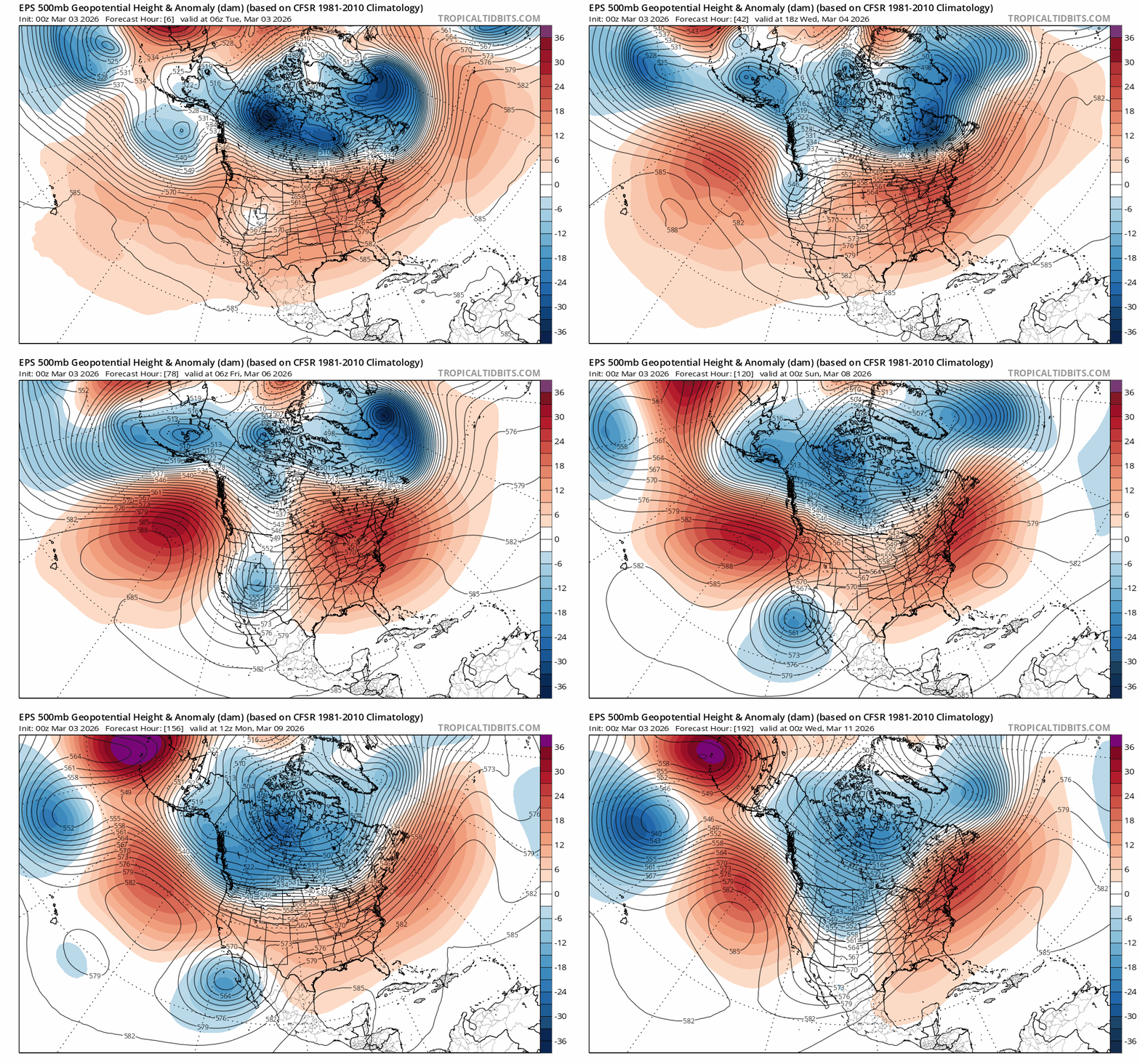
    EPS ensemble prog for 500mb height anomalies from early afternoon on 1/15 through evening on 1/19.

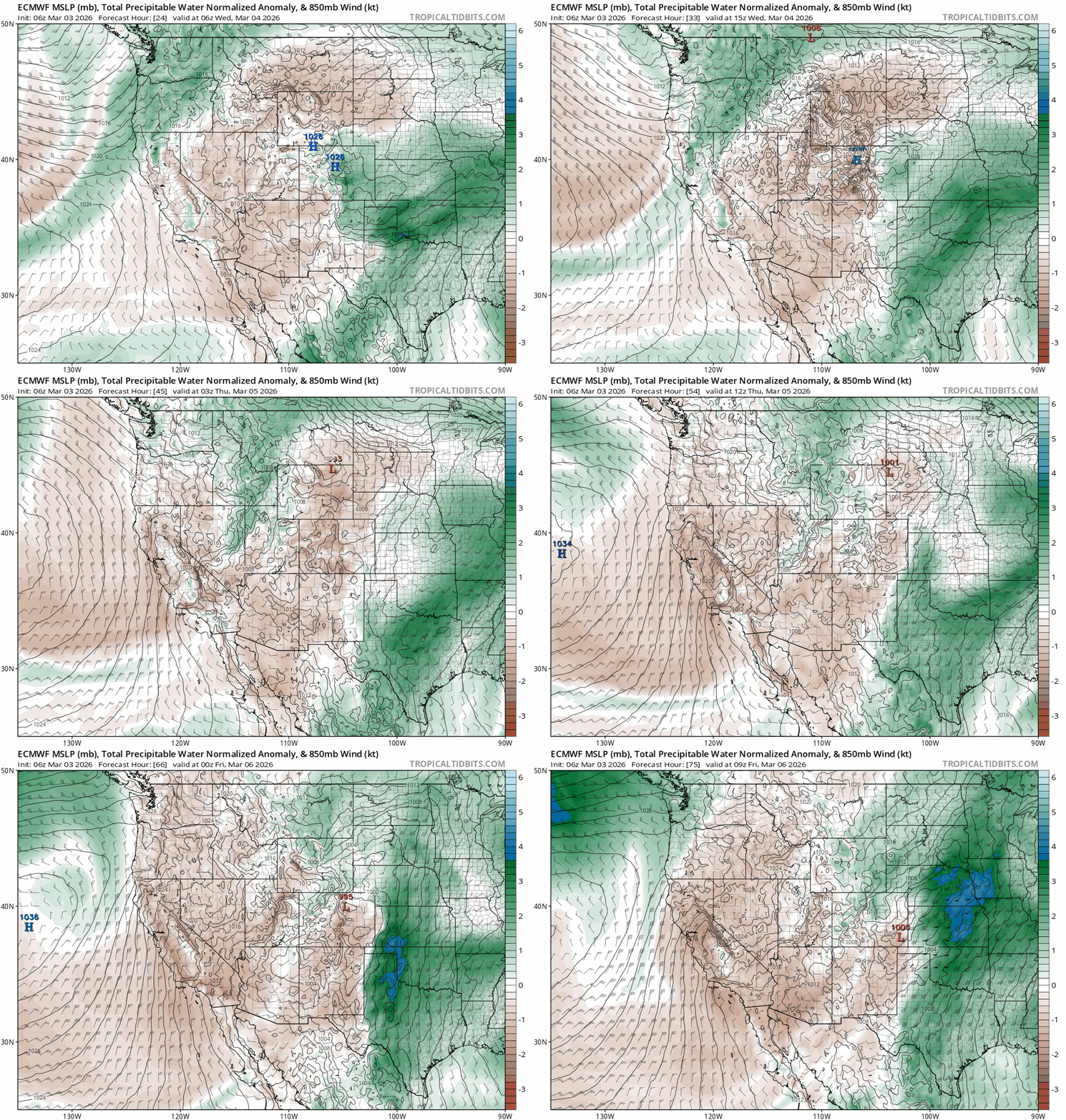
    The ridge does show signs of migrating NW into the Gulf of Alaska later next week, which could allow some energy to under cut its influence, but anything that does arrive looks starved for moisture. An uptick in winds and cooler temps would be the most likely result, but any appreciable backcountry refresh appears unlikely through next week (1/19-1/23).

    Some ensemble guidance does pick up on some light precip. and cooler temps reaching the Sierra by next weekend (1/23-1/25), but it’s inconsistent and recent model runs have pulled back on the already light total precip. amounts, inspiring little, if any, confidence.

    GEFS ensemble forecast trend for total precip. from 1/15 through late night on 1/25.

    Looking way out towards the end of month and first few days of February, climate models do suggest changes in some key teleconnections that could favor a pattern change for the western US. The MJO (Madden Julian Oscillation) shows signs of potentially re-energizing and entering a phase favorable for unsettled weather in CA. Additionally, the weak La Niña in the equatorial Pacific appears to be breaking down and will continue to do so going into the spring. Changes are afoot. How and when they play out remains an open question.

    So get used to the sunshine, warm days and increasingly spring-like snow conditions on southerly aspects. Juneuary is here for a while.

    Share this:

    • Share on Reddit (Opens in new window) Reddit
    • Email a link to a friend (Opens in new window) Email
  • Gettin’ ridgey wit it

    January 9th, 2026

    1/8 new snow at 6350′ in Carnelian Bay: 4″

    Backcountry obs.:

    Conditions in the backcountry this week have been squirrely. Early in the week, feet of fresh snow graced the entire region making for midwinter coverage all the way down to 7000′. While the storm system added 2-4′ of new snow, it ended with significant SW winds, creating unstable wind slabs high along peaks and ridges. Temperature wobbles during the storm also created an upside-down density structure within the storm snow. As a result, numerous avalanches occurred in the backcountry on 1/5, including a fatality near Castle Peak.

    On Weds (1/7) a tour along the West Shore from 7000′ – 8400′ revealed soft, upside down snow in N and NE facing sheltered terrain, and breakable 1/4″ sun crust atop cold, soft snow on solar aspects. Near the Sierra Crest, wind slabs remained sensitive as evidenced by skier-triggered shooting cracks in steeper wind loaded terrain. While temps hadn’t broken freezing since the previous storm, the snow underfoot skied heavy and grabby. Wide, arcing turns were the best defense against sinking into thick, layered snow beneath.

    This whole scenario changed by Thurs. (1/8) as a cold inside slider dropped in on Weds. night (1/7), bringing strong winds, light snow and the coldest temps of the season. Anywhere from 4-8″ of light, dry snow fell across the Tahoe backcountry in the wee hours of 1/8. In the wake of the system, a cold N and NE flow kept temps in teens throughout the day on 1/8.

    Light, soft snow remained abundant in the Mt. Rose backcountry at dawn on Fri (1/9). 24 hours after snowfall ended, cold temps in the low to mid teens held a pristine 4-6″ of dry powder, especially in sheltered zones. Beneath the new snow, the dense and stratified snow from last weekend’s storm appeared to be gaining cohesion and density. There’s a less upside-down feel to the snowpack than earlier in the week.

    Some light wind effect has textured snow along ridge lines and on exposed N and NE aspects. In some areas this presents as harmless texture, while in others dense wind effect sits atop cold, light snow, or just the opposite: a few inches of cold windblown powder resting atop a slippy, barely breakable wind crust. NE exposed faces and gullies require an attuned powder sniffing nose to find the best, most consistent snow without falling victim to lurking trapdoor wind effect.

    Weather and forecast thoughts:

    Today starts a warming and drying trend that may last weeks across the Tahoe Sierra. A building PacNW ridge of high pressure is replacing the troughy pattern responsible for the wet systems over the past few weeks. Expect sunny skies for the foreseeable future with temperatures starting cool today (1/9) with highs in the upper 20s – low 30s above 7000′, to moderating a bit each day, then peaking above average (low – mid 40s) by the middle of next week. Strong inversions will likely set up each night with calm winds and clear skies.

    Worth noting: In these high pressure scenarios, mountain ridges and summits often remain near or above freezing at night while valleys and depressions can be 10°F or more cooler. In these regimes, very dry air at the upper elevations can help preserve soft snow in shaded areas despite warm temps.

    Beyond next week, model ensembles point towards a ridge of high pressure setting up over the PacNW and parking it for a “big sit” until at least late January. Confidence is high in above average temps and little to no precip. through at least MLK Day (1/19).

    GEFS 500mb height anomalies from 2200 PST on 1/9 – 0400 PST on 1/25 showing a ridging pattern setting up for the majority of January.

    Beyond 1/20, it’s too early to say. The ridge could shift into the Gulf of Alaska, but the pattern would still remain largely dry. Once again, we swing from very wet to bone dry.

    In the mean time, the backcountry has a great, thick base that could weather a dry spell fairly well. Low January sun angles and generally weak solar radiation will also help keep melt relatively slow compared to later in the season. It’s not powder, but dry spells like this can create mini corn cycles on due southerly aspects – and ripping corn is good fun!

    Break out the sunnies!

    Share this:

    • Share on Reddit (Opens in new window) Reddit
    • Email a link to a friend (Opens in new window) Email
  • Finishing cold and mellowing out

    January 6th, 2026

    Backcountry obs: 

    0500 temp at 8400′ Mt. Rose backcountry TH: 23 deg. New snow: 2-3+’.

    The backcountry’s doing alright. A multi-day day storm from 2026’s first weekend dropped feet of new snow across the area above 7000′., with the greatest amounts focused along the Sierra Crest. Much like the Christmas storm cycle, the recent storms were not all that cold, starting as rain at higher elevations, before cooling off just enough to allow feet of high density cement to further deepen the snowpack. Despite the warmth, the storms bolstered the snowpack giving the nascent season a bit more longevity should prolonged drier weather move in. 

    Touring above Incline Village at dawn on Mon. (1/5), I found multiple feet of new, wind affected snow starting at 8400′ all the way to 9500′. Ski tracks from the previous day had been either filled or sculpted into elegant mounds and fins. Even in sheltered forested areas, winds had added texture and density changes to the new snow. In open areas, a soft, breakable wind board had formed with notable, yet nonreactive wind slabs across lee micro-features. Sheltered trees held the least affected snow, but layered, upside down density changes throughout the high density snow created notable friction underfoot on the descent. Not effortless snow, but still generally fun at speed if given an assertive pop to each turn. However, the wind affected and layered new snow did raise a few flags for stability concerns.

    Weather and forecast thoughts: 

    The active pattern responsible for the last storm cycle will wind down throughout the coming week (1/6-1/9), but not before another weak system brushes the area on Weds PM (1/7) bringing chances for another few inches of accumulation to the higher terrain. Temps will be at their warmest for the work week on Tues (1/6), reaching the low to mid 30s above 7000′, before falling back into the 20s for highs Weds – Fri as the approaching system brings in a reinforcing shot of cold air. Expect SW winds to pick up in advance of this next system, before slackening and switching around to the N and E on Thurs and Fri as its attendant low shifts south and eastward.

    The system swinging through on Weds PM-Thurs AM will have an “inside slider” identity, bringing cold air and lighter snow amounts, so high snow levels won’t be an issue this time around. The colder airmass will bring lower density snow to rest atop the feet of high density base deposited over the holidays.

    GEFS ensemble forecast for freezing levels in the Tahoe Basin 1/6-1/13.

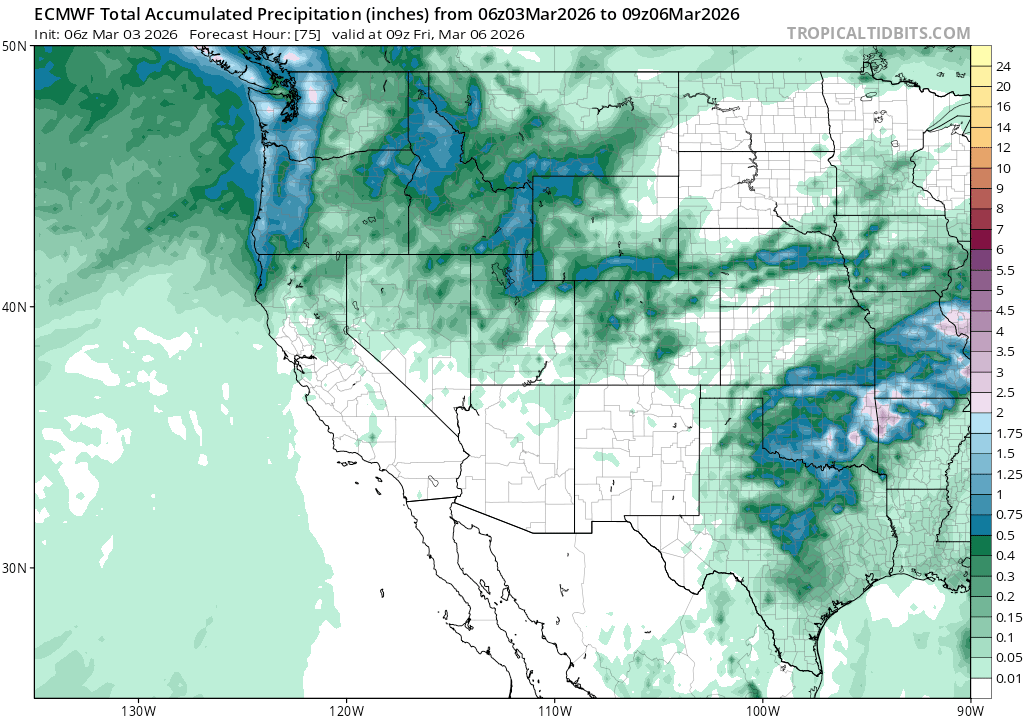
    As with most inside sliders, snow totals will be generally light this week. Expect 2-5″ across the backcountry with lesser amounts across the southern half of the Tahoe Basin and at lower elevations. Models still have some spread in forecast snow amounts giving lower confidence in higher end totals.

    ECMWF total snow accumulation through 1600 PST on 1/8/26.
    GFS total snow accumulation through 1600 PST on 1/8/26.

    Once the midweek system departs, NE flow will bring in a reinforcing shot of cold air, preserving the new snow. Model guidance doesn’t suggest a strong NE wind event on the backside of the system, but some 10 – 15 knot breezes on ridge tops aren’t out of the question.

    Looking ahead to next weekend, ridging looks to take hold over the West Coast, ushering in clear skies, light winds and moderating temps. for the weekend and well into next week (1/12-1/16). Expect the return of daily inversions with cold nights in depressions and valleys with warmer temps on the peaks, yet under a dry airmass. Model ensembles suggest high temps this weekend starting cool, then warming a few degrees each day. By early next week, temps will warm further to a few degrees above average, but likely avoiding any large scale June-uary heat events.

    GEFS ensemble for 2m temps. 1/10-1/15.

    Considering the abysmal start to the winter, the backcountry’s actually in pretty good shape. Low sun angles, and an ample snowpack should help the backcountry weather the upcoming mild stretch quite well.

    Share this:

    • Share on Reddit (Opens in new window) Reddit
    • Email a link to a friend (Opens in new window) Email
1 2 3 … 45
Next Page→

Create a website or blog at WordPress.com


Loading Comments...
 

    • Subscribe Subscribed
      • Tahoe Backcountry Snow
      • Already have a WordPress.com account? Log in now.
      • Tahoe Backcountry Snow
      • Subscribe Subscribed
      • Sign up
      • Log in
      • Report this content
      • View site in Reader
      • Manage subscriptions
      • Collapse this bar