1709 wx. at 6350′ in Carnelian Bay: Moderate rain / 49.6°F / 49.1°F dew point / 98% RH / total daily rainfall: .64″
Weather and forecast thoughts:
October 1 rang in the new water year with a few hundredths of an inch of rain and the wet parade continues to this writing with more than 1/2″ falling so far today. The bluebird beach days of late summer have recently been interrupted by cool, rainy and unsettled weather. Fall is quickly descending upon the Sierra and the first snows of the year are just around the corner.
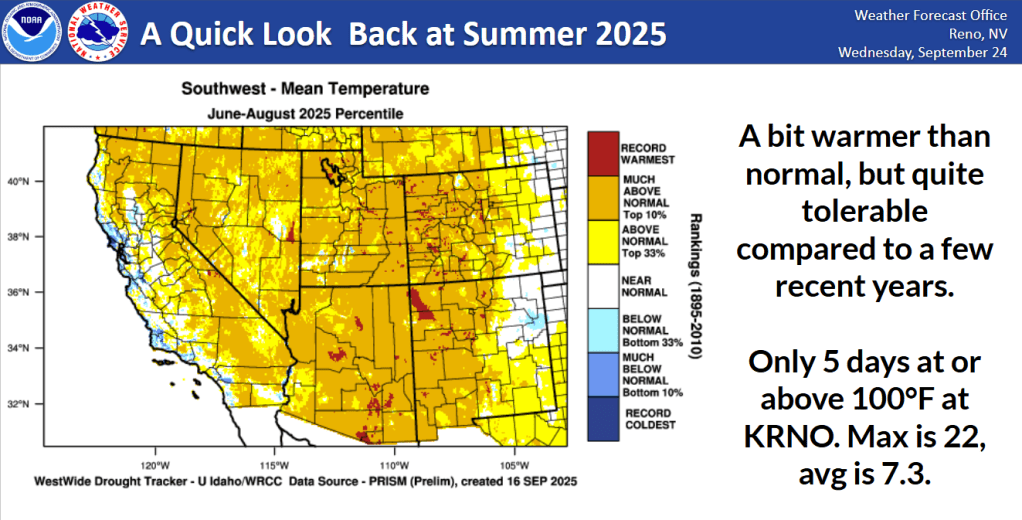
By Sierra standards, it was a great summer. Choking wildfire smoke and insufferable heat never really materialized. Temperatures averaged slightly above normal and while generally dry in the first half, the monsoon did eventually kick in, bringing rounds of wet afternoon thunderstorms in July and August. Just as trails were reaching peak dustiness, the sky provided relief. It’s been downright pleasant, a far cry from the searing heat and weeks of smoke from summers passed.
Looking ahead to ski season 2026:
“Long range models are too good to ignore, but too unreliable to use.”
Over the past year I’ve been back in school completing a forecasting program at Penn State. Of all the exciting things I’ve learned, one that gives me the most pleasure is encapsulated in the above quote from someone over the years. Even with all the collective understanding of the science and new tools at our disposal, long range forecasting remains difficult. Accuracy diminishes significantly beyond five days, not to mention five months out. What is available does help to paint a general picture of what’s out there. Current technology allows us to see oceanic conditions and atmospheric circulations. But the atmosphere and its interplay with the oceans is chaotic. We simply don’t have the capacity to measure every air parcel of the atmosphere at every point in time, and then plug those observations into predictive models. What a joy to be so humbled and have so much yet to discover!
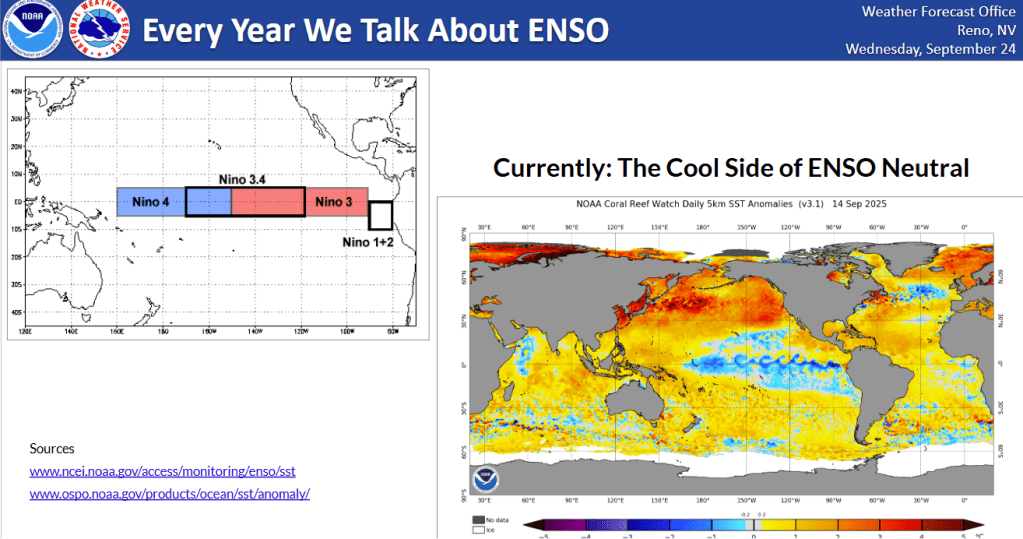
Looking at what’s on the table for the coming year, the tropical Pacific currently shows signs of a weak La Niña developing.
Despite the dramatic headlines, there is very little, if any, correlation between La Niña and wet or dry years in the Sierra. Take a look at the below graph showing Dec-Feb precipitation in El Niño, La Niña, and ENSO neutral conditions dating back to the mid 30’s.
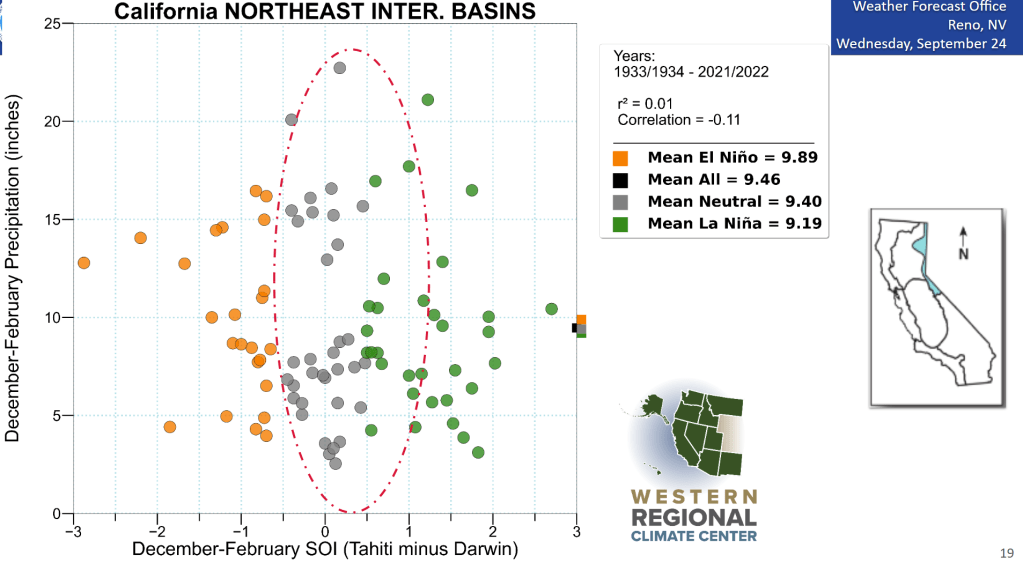
It’s all over the map.
In the chaos of the atmosphere, ENSO is only one background variable of many different atmospheric circulations and oceanic conditions that can affect what we end up receiving in the Sierra. While it often receives so much attention – and rightly so for many parts of the world – the data don’t seem to bear out any strong signal for the Sierra.
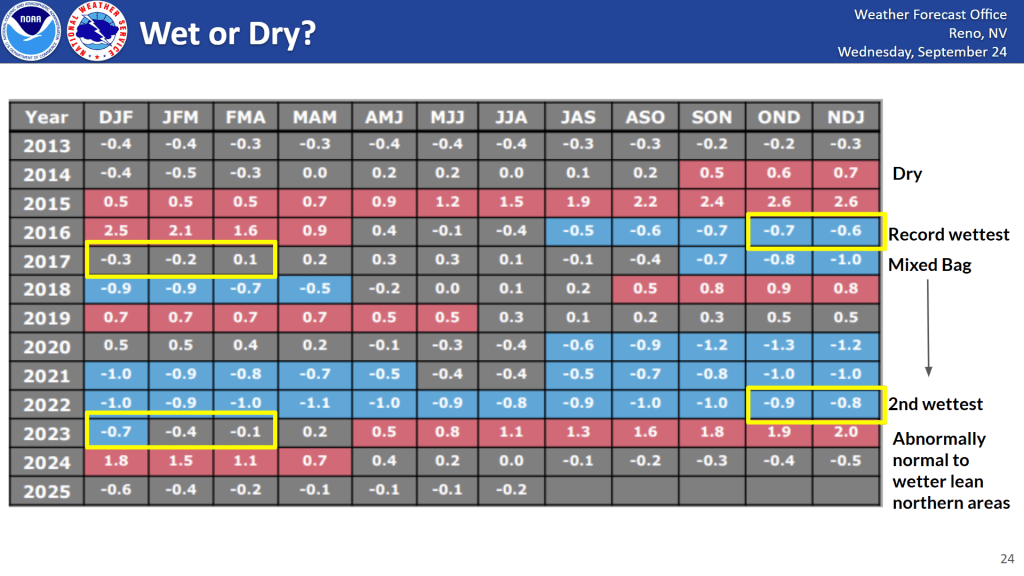
Here’s another table to illustrate the point. The two biggest years of the past few decades actually came in during ENSO conditions similar to now that inspired more yawns than screams.
And here are some charts showing how ENSO conditions similar to what we’re currently experiencing play out seasonally for temperature and precipitation anomalies.
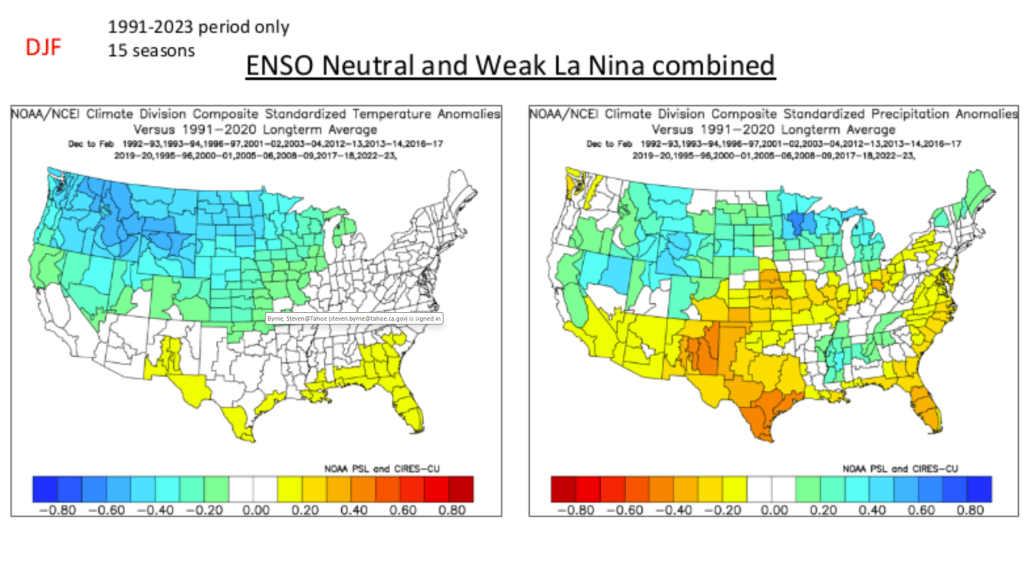
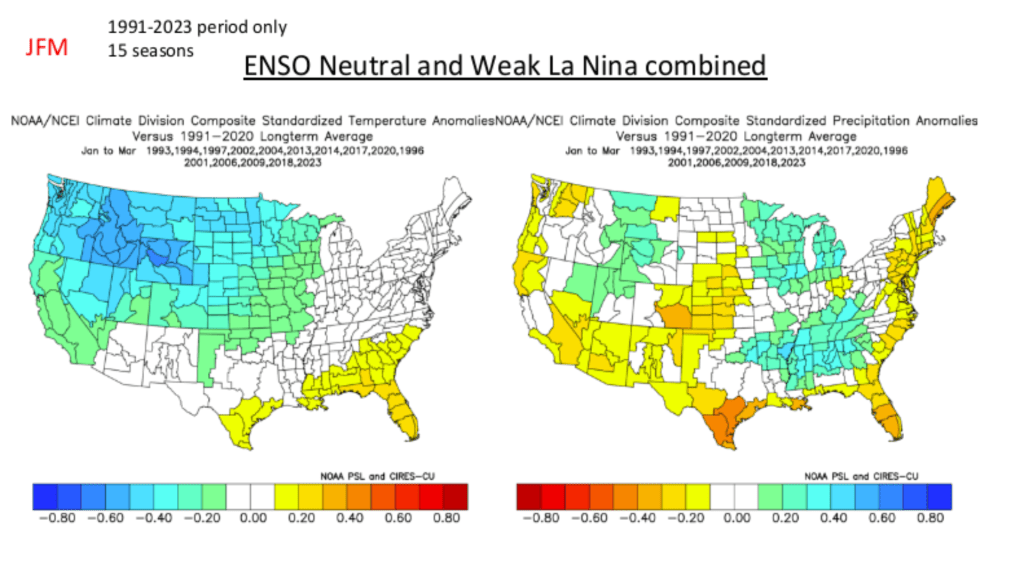
Can a big year happen? Sure. Can a mediocre or bad year happen too? Yep.
There’s simply too much chaos in the system and too much that we don’t yet know or understand to be able to accurately predict the season to come. The past does give insights, but the past also occurred in conditions with less total background global warming into the earth system. While we can do our best to model out thousands of scenarios, even using AI, we simply cannot account for all the variables and unknown unknowns lurking in the future.
So where does this leave the Central Sierra? Based off current conditions and what we do know, the Climate Prediction Center places the Tahoe Basin in the swath of “anything’s possible” for the coming season.
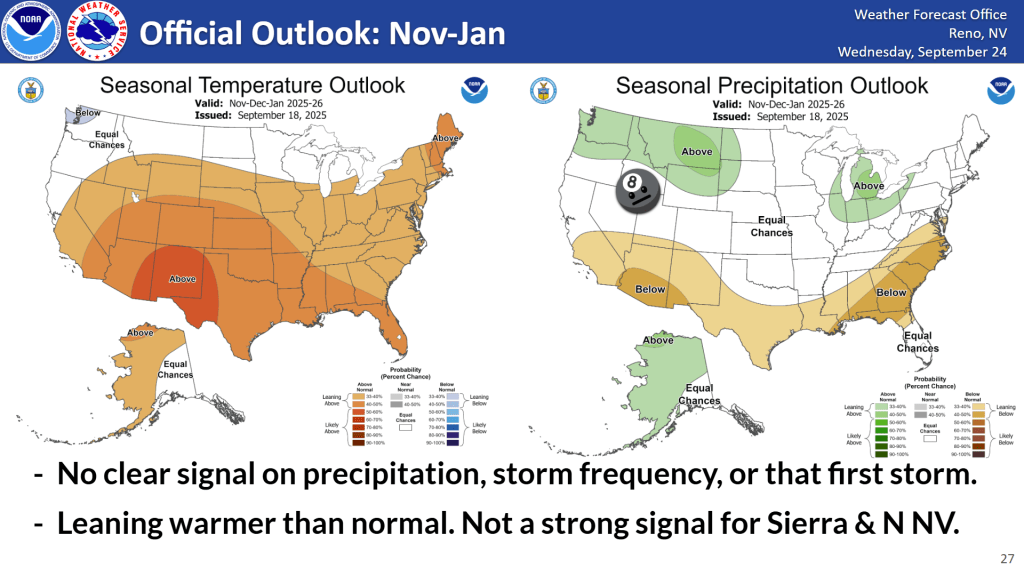
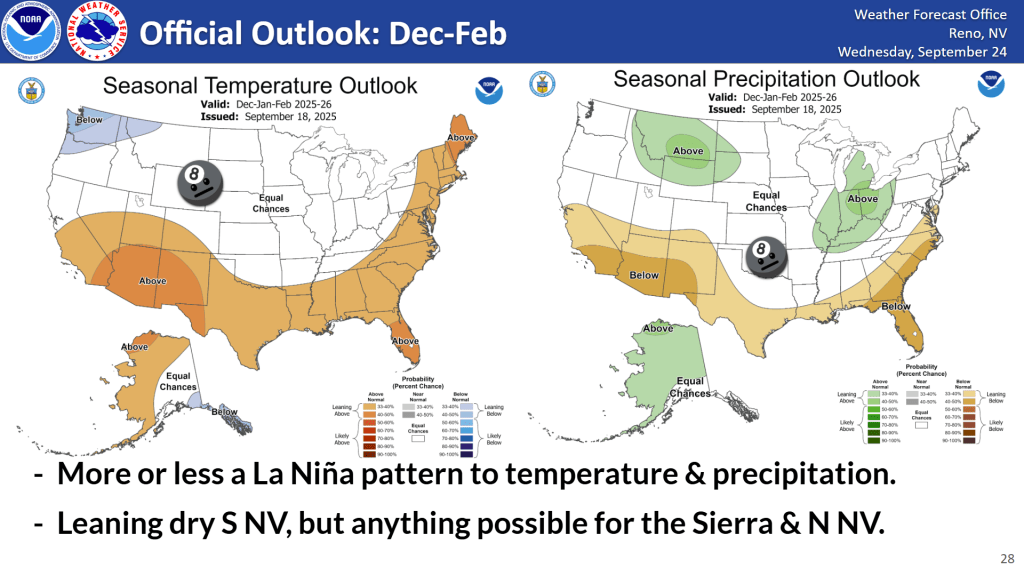
I would anticipate anything happening this year, but with a lean in expectations towards warmer than average temperatures and higher snow levels. The earth is warming and with a historical mean snow level of 5000′-6000′ in the Central Sierra, there’s not a lot of grace around lake level when the background conditions are 2-3°F warmer with each storm.
There’s plenty of high terrain in the Sierra. With the right timing, knowledge, creativity, and effort, anyone can have a great season in the backcountry, no matter what the seasonal forecast suggests.
Here’s to another great season!
 Tahoe Backcountry Snow